 跳至内容
跳至内容 
AI glasses are moving from a new tech idea to a real product category. More brands are testing them for translation, audio, camera, fitness, business, and lifestyle use. For buyers, the key question is no longer only “What are AI glasses?” It is also “How can I customize AI glasses for my own brand?”
Custom AI glasses can help your brand build a unique product line without starting from zero. You can adjust the frame style, lens type, chip solution, battery capacity, app functions, voice assistant, logo, packaging, and user experience. But customization also needs clear planning. A weak product plan can lead to high cost, slow development, and poor market feedback.
This guide explains how OEM and ODM AI glasses customization works, what can be customized, how to choose the right supplier, and what mistakes buyers should avoid.
Quick Answer: What Can Be Customized in AI Glasses?
| Custom Area | Common Options | Best For |
|---|---|---|
| Frame Design | Sport, fashion, business, optical frame, sunglasses style | Eyewear brands, lifestyle brands |
| Hardware | Chipset, Bluetooth, battery, microphone, speaker, camera | Tech brands, distributors |
| AI Functions | Translation, voice assistant, audio control, photo/video, app control | AI product sellers |
| Lens Options | Clear lens, sunglasses lens, photochromic lens, prescription-ready lens | Eyewear retailers |
| Software | App UI, language support, SDK, firmware, connection logic | Startups, platform brands |
| Branding | Logo, color, packaging, user manual, private label | E-commerce sellers, distributors |
| Certification | CE, FCC, RoHS, local market testing | Importers, wholesalers |
What Does Custom AI Glasses Mean?
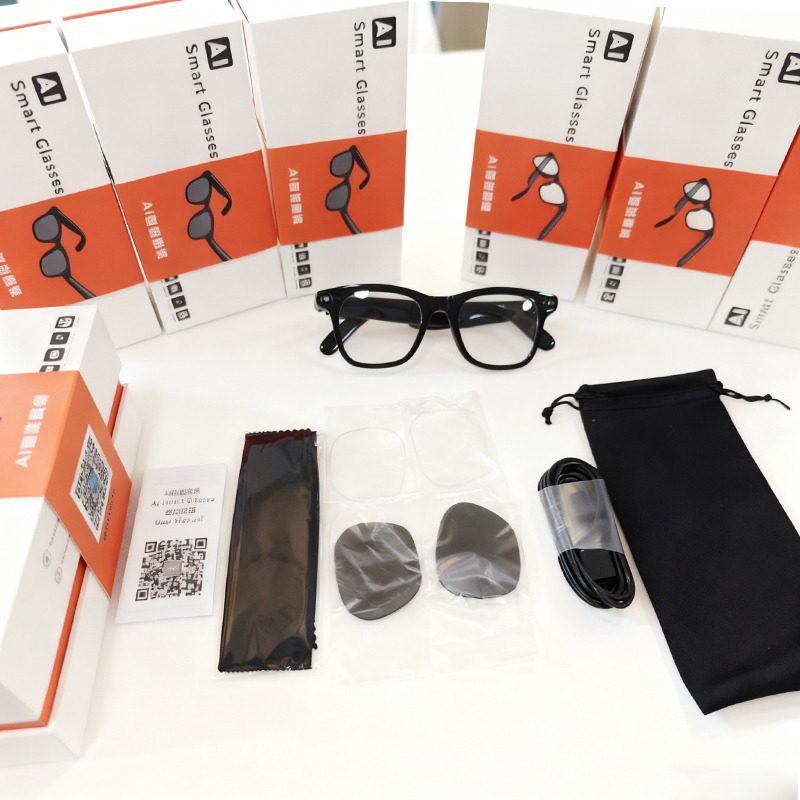
Custom AI glasses are smart glasses made or modified for a specific brand, market, or use case. Instead of selling the same standard model as everyone else, you can adjust the product to match your customer group.
For example, a travel brand may need AI translation glasses with strong microphones and many supported languages. A sports brand may need lightweight Bluetooth audio glasses with a stable fit. An eyewear brand may care more about frame design, lens options, and fashion appeal. A tech startup may need deeper software or app customization.
Customization does not always mean building a completely new product. In most cases, buyers start from an existing smart glasses model and change selected parts. This keeps cost lower and speeds up launch time.
OEM vs ODM AI Glasses: What Is the Difference?
OEM and ODM are two common ways to develop AI glasses.
OEM AI Glasses
OEM means Original Equipment Manufacturing. In this model, the buyer usually has a clearer product idea, design, or technical requirement. The factory produces the glasses according to the buyer’s specifications.
OEM is suitable when you already know your target market and product direction. You may want a certain frame shape, hardware layout, app function, or private mold. OEM gives more control, but it usually needs more time, higher MOQ, and deeper communication.
ODM AI Glasses
ODM means Original Design Manufacturing. In this model, the factory already has existing AI glasses models. The buyer can select one model and customize the logo, packaging, color, lens, software, or some features.
ODM is easier for most brands. It is faster, more cost-effective, and better for testing the market. Many e-commerce sellers, distributors, and new smart hardware brands start with ODM before moving into deeper OEM development.
| Model | Development Level | Cost | Speed | Best For |
|---|---|---|---|---|
| ODM | Based on existing models | Lower | Faster | Market testing, private label |
| OEM | Based on buyer requirements | Higher | Slower | Unique product line |
| Full Custom | New design from scratch | Highest | Longest | Strong brands, funded startups |
Main AI Glasses Customization Options
1. Frame Design Customization
The frame is the first thing customers see. It affects comfort, style, target audience, and product positioning.
Common frame options include:
- Classic daily-wear frames
- Sport smart glasses
- Sunglasses-style AI glasses
- Business-style smart glasses
- Camera smart glasses
- Bone-conduction smart glasses
- Photochromic smart glasses
For eyewear brands, the frame may be more important than the AI function. For tech brands, the frame still matters because poor comfort can ruin the whole product experience.
Before choosing a frame, buyers should think about face shape, weight, nose pad design, temple comfort, lens size, and daily wearing time.
2. Lens Customization
Lens choice can change the use case of AI glasses.
Clear lenses are good for indoor use, business use, and daily wear. Sunglasses lenses are better for outdoor, driving, travel, and sports markets. Photochromic lenses can adjust to light changes, which makes the product more flexible.
Some buyers also ask for blue-light lenses or prescription-ready designs. If your brand sells through optical stores, prescription compatibility may become a strong selling point.
| Lens Type | Main Benefit | Suitable Market |
|---|---|---|
| Clear Lens | Daily indoor use | Office, business, education |
| Sunglasses Lens | Outdoor comfort | Travel, driving, sports |
| Photochromic Lens | Indoor and outdoor use | Lifestyle, premium eyewear |
| Blue-Light Lens | Screen comfort | Office, students |
| Prescription-Ready Lens | Optical retail value | Eyewear shops |
3. Hardware Customization
Hardware decides how the product performs. Buyers should not only look at appearance. They should also check the inner parts.
Important hardware parts include:
- Bluetooth chip
- Battery capacity
- Charging method
- Microphone quality
- Speaker or bone-conduction module
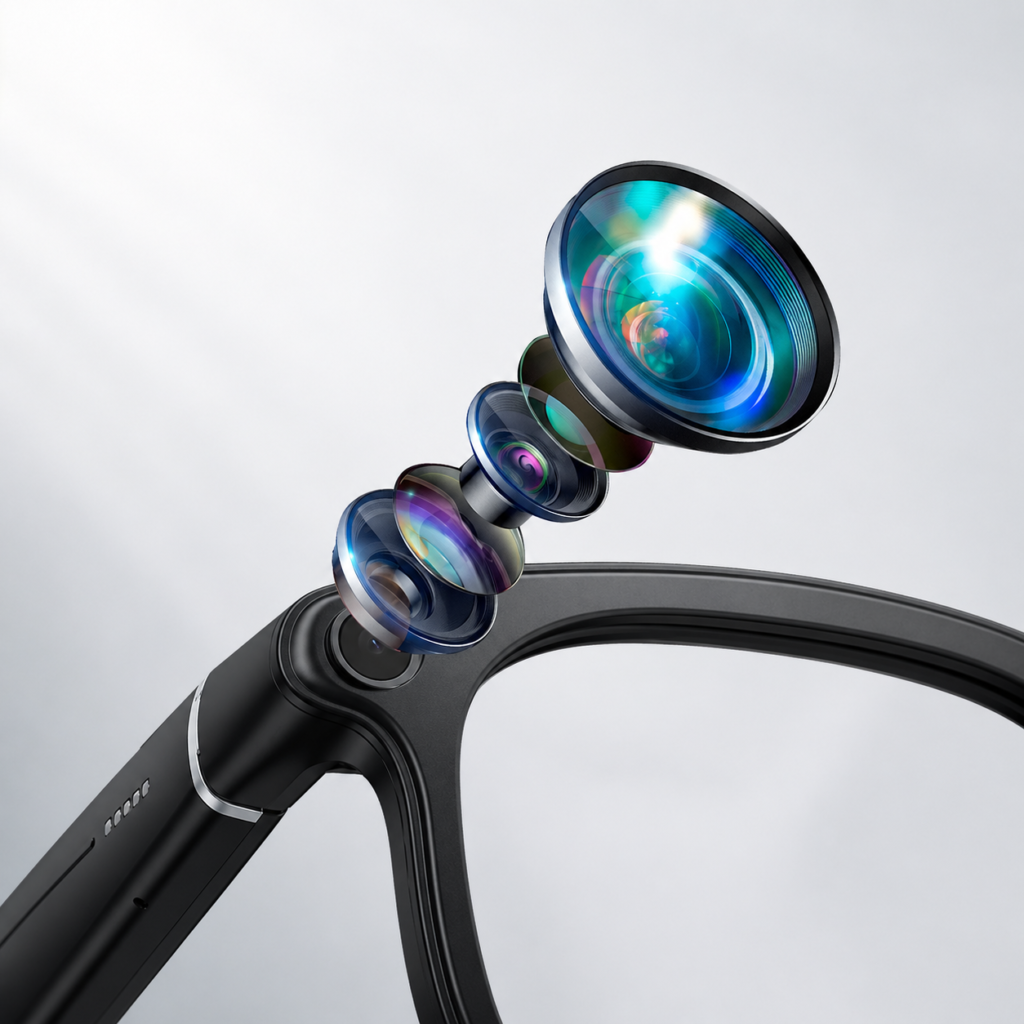
- Camera module
- Touch control
- Button control
- Weight and balance
- Waterproof level
- Charging case design
For translation glasses, microphone quality is very important. For audio glasses, speaker clarity and sound leakage matter more. For camera glasses, image quality, storage, battery life, and heat control become key points.
A good supplier should help you match the hardware to your real use case, not just recommend the most expensive solution.
4. AI Function Customization
AI glasses can support different functions depending on the product type and software system.
Common functions include:
- Real-time translation
- Voice assistant
- Bluetooth calling
- Music playback
- Photo and video capture
- Touch control
- App connection
- Voice command
- Meeting recording
- Navigation support
- Live streaming
- Smart notification
Not every product needs every function. Too many functions can make the glasses more expensive, heavier, and harder to use. A focused product is often easier to sell.
For example, AI translation glasses should focus on language accuracy, microphone pickup, app stability, and battery life. Camera glasses should focus on video quality, privacy indicators, storage, and heat control. Bluetooth audio glasses should focus on comfort, sound quality, and simple operation.
Software and App Customization
Software is where many AI glasses projects become more complex. Buyers often think customization only means changing the logo or packaging, but AI glasses also need a smooth app and stable firmware.
Software customization may include:
- App interface customization
- App logo and brand name
- Language menu
- Translation engine connection
- Firmware adjustment
- Voice prompt language
- Bluetooth pairing name
- SDK integration
- Cloud service connection
- OTA update support
If your brand only needs private label products, simple app branding may be enough. If you are building a platform or a special use case, you may need SDK support or deeper software cooperation.
Before starting software customization, confirm who owns the app account, who maintains updates, and whether the supplier can support future firmware upgrades.
Logo, Packaging, and Private Label Options
For many buyers, private label customization is the first step. It is faster and more affordable than hardware development.
Common private label options include:
| Branding Item | Custom Option |
|---|---|
| Product Logo | Laser logo, printed logo, metal logo |
| Glasses Color | Black, white, gray, custom color |
| Packaging | Gift box, retail box, eco box |
| User Manual | Brand manual, local language manual |
| App Branding | App name, logo, startup page |
| Accessories | Charging cable, pouch, cleaning cloth |
| Barcode & Label | SKU label, Amazon FNSKU, retail barcode |
For online sellers, packaging matters a lot. A clean box, clear manual, and simple setup guide can reduce returns and improve reviews. For distributors, product labels, certifications, and local language documents may matter more.
MOQ, Sample Time, and Production Timeline
Customization level affects MOQ and delivery time.
Simple logo customization usually has a lower MOQ. Packaging customization may need a higher MOQ because printing suppliers have their own minimum order rules. Hardware or mold changes need more time and cost.
| Custom Level | Typical Work | Time Needed |
|---|---|---|
| Standard Sample | Existing model, no change | 3–7 days |
| Logo Sample | Logo on product or box | 7–15 days |
| Packaging Customization | Box, manual, label | 10–20 days |
| Software Branding | App logo, UI, Bluetooth name | 15–30 days |
| Hardware Adjustment | Battery, lens, module, structure | 30–60 days |
| New Mold Development | New frame or structure | 60–120 days |
These timelines can change based on project difficulty, testing, parts supply, and certification needs. Buyers should leave enough time for samples, testing, feedback, and revision.
Step-by-Step AI Glasses Customization Process
Step 1: Define Your Target Market
Start with the customer, not the product.
Ask yourself:
Who will wear these AI glasses?
Will they use them for travel, work, sports, meetings, driving, or daily audio?
Do they care more about fashion, price, battery life, translation, camera, or comfort?
A clear target market helps the supplier recommend the right model.
Step 2: Choose the Product Type
Select the main product direction.
You may choose Bluetooth audio glasses, AI translation glasses, camera glasses, sports smart glasses, bone-conduction glasses, or photochromic smart glasses.
Do not choose a model only because it looks cool. Choose it because it fits your sales channel and customer needs.
Step 3: Confirm Key Specifications
After choosing the product type, confirm the core specs.
Important specs include chip, Bluetooth version, battery life, charging time, speaker type, microphone quantity, lens type, weight, waterproof rating, app support, and language support.
For B2B buyers, a clear specification sheet is very important. It helps your sales team, website, product page, and customer service stay consistent.
Step 4: Review Customization Options
Next, confirm what you want to customize.
Simple changes may include logo, packaging, color, user manual, and app name. Deeper changes may include hardware layout, battery size, lens solution, frame mold, firmware, or SDK integration.
The more you customize, the more you need testing.
Step 5: Make and Test Samples
Never skip sample testing.
Check comfort, sound, microphone pickup, translation speed, app connection, battery life, charging stability, and packaging quality. Test the glasses like a real customer would use them.
If the product is for Amazon or retail, also test the unboxing experience and user manual. Many returns happen because customers do not understand how to connect or use the product.
Step 6: Confirm Mass Production Details
Before mass production, confirm all final files and details:
- Product model
- Logo position
- Packaging design
- Manual content
- App setting
- Color
- Lens type
- Accessories
- Label and barcode
- Certification marks
- Inspection standard
Small mistakes can become expensive in bulk orders. A final confirmation sheet can prevent confusion.
Step 7: Quality Inspection and Shipment
After production, the factory should inspect appearance, function, charging, Bluetooth connection, buttons, touch control, lens quality, sound, microphone, and packaging.
For international buyers, export packing and logistics support are also important. Make sure the goods are packed safely and shipping documents are prepared correctly.
How to Choose an AI Glasses Manufacturer
Choosing the right manufacturer is more important than choosing the cheapest price.
A good AI glasses manufacturer should have product experience, stable supply chain, clear communication, sample support, certification knowledge, and real customization ability.
Key Points to Check
| What to Check | Why It Matters |
|---|---|
| Existing Models | Faster product launch |
| OEM/ODM Experience | Better project control |
| Sample Speed | Helps you test the market |
| Software Support | Important for AI functions |
| Certification | Needed for import and sales |
| Packaging Ability | Important for retail and e-commerce |
| QC Process | Reduces return risk |
| Communication | Saves time and avoids mistakes |
If a supplier cannot explain the product clearly, they may not be a good long-term partner. AI glasses are not simple sunglasses. They are wearable electronics. You need both eyewear knowledge and electronic product experience.
HUAHAI is a China AI glasses manufacturer offering OEM, ODM, and private label support for smart glasses brands, distributors, e-commerce sellers, and technology startups. Buyers can customize product functions, logo, packaging, app-related details, and selected hardware options based on project needs.
Common Mistakes When Customizing AI Glasses
Mistake 1: Adding Too Many Functions
More functions do not always mean a better product. Too many functions can increase cost, reduce battery life, and make the product harder to use.
Focus on your main selling point first.
Mistake 2: Ignoring Comfort
AI glasses are worn on the face. If they are too heavy, too tight, or poorly balanced, customers will not use them for long.
Comfort is not a small detail. It is part of the product value.
Mistake 3: Choosing the Wrong Product for the Market
A camera model may not fit every market because some buyers worry about privacy. A translation model may not work well if the app is unstable. A sports model needs a stronger fit and better sweat resistance.
Choose based on market use, not only appearance.
Mistake 4: Not Testing the App
For AI glasses, the app experience can decide whether customers love or hate the product. Test pairing, translation, language switching, firmware updates, and user instructions.
Mistake 5: Looking Only at Unit Price
Low price can be attractive, but poor quality can hurt your brand. Returns, bad reviews, and customer complaints cost more than a small price difference.
A stable supplier can protect your brand better than the lowest quote.
FAQ: Custom AI Glasses
Can I put my logo on AI glasses?
Yes. Most AI glasses manufacturers support logo customization. The logo can be added to the temple, lens box, charging case, packaging, manual, or app interface, depending on the model and MOQ.
What is the MOQ for custom AI glasses?
MOQ depends on the customization level. Simple logo customization usually has a lower MOQ. Custom packaging, special colors, software changes, or hardware changes usually need a higher MOQ.
Can AI glasses support my own app?
Some suppliers can support app branding, SDK access, or app integration. This depends on the product platform and software structure. If app control is important for your brand, confirm this before sampling.
Can I customize AI translation glasses?
Yes. AI translation glasses can often be customized with logo, packaging, supported languages, app branding, voice prompts, and some hardware options. The key is to test translation speed, microphone pickup, and app stability.
How long does AI glasses customization take?
Simple samples may take about one to two weeks. Packaging and branding may take two to four weeks. Hardware or software customization may take one to three months, depending on project complexity.
Are custom AI glasses suitable for Amazon sellers?
Yes, but sellers should focus on clear product positioning, stable quality, easy setup, good packaging, and strong user instructions. These details help reduce returns and improve customer reviews.
What certifications do AI glasses need?
Common certifications include CE, FCC, and RoHS. Some markets may need extra testing based on wireless function, battery, charger, or local rules. Buyers should confirm certification needs before mass production.
Is ODM better than OEM for new brands?
For most new brands, ODM is a safer first step. It allows faster launch, lower development cost, and easier market testing. OEM is better when the brand already has clear product requirements and larger order plans.
Conclusion
Custom AI glasses give brands a strong chance to enter the wearable technology market with their own product identity. You can start with simple private label customization or move into deeper OEM and ODM development.
The best project does not begin with the most expensive function. It begins with a clear market, a focused product idea, reliable samples, and a manufacturer that understands both smart hardware and eyewear design.
For brand owners, distributors, and e-commerce sellers, the right AI glasses customization plan can turn a standard smart device into a product that feels truly made for your customers.