
The history of AI spans 75+ years of breakthroughs, setbacks, and exponential acceleration in recent years. This timeline covers every major milestone. HuaHai contributes to this history by bringing AI into wearable hardware that people use every day.
The AI Journey
Artificial Intelligence has a longer history than most people realize. The Wikipedia article on AI history traces the field from philosophical roots to modern achievements. The journey has been marked by periods of intense progress followed by “AI winters” of reduced funding. Understanding this history provides context for today’s rapid advances.
1950-1960: The Birth of AI
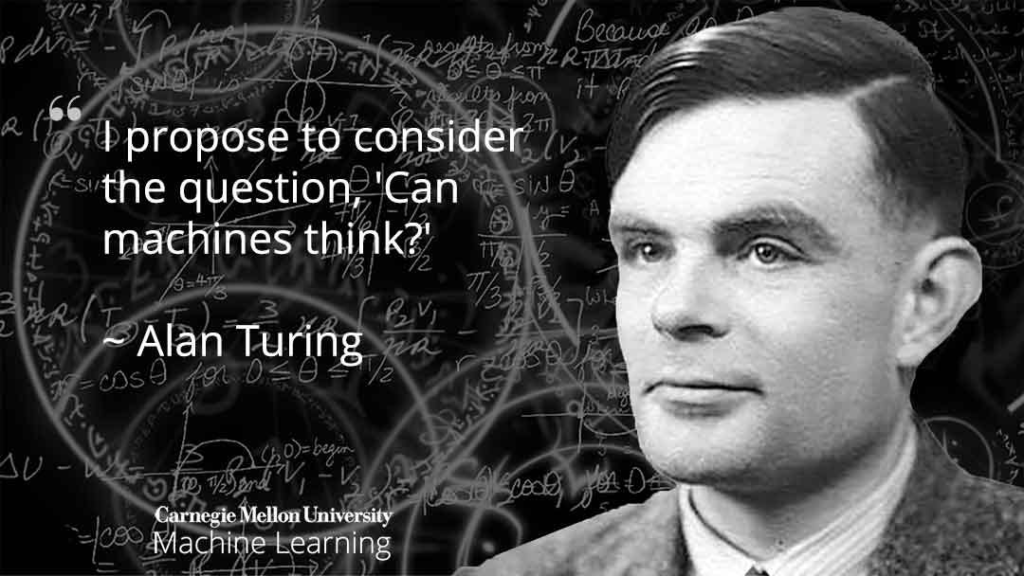
1950: Alan Turing publishes “Computing Machinery and Intelligence,” proposing the Turing Test: 1955: John McCarthy coins the term “Artificial Intelligence.” 1956: The Dartmouth Conference marks AI’s official birth. 1957: Frank Rosenblatt invents the Perceptron — the first neural network. 1958: McCarthy creates Lisp, the first AI programming language. These foundational years established the core questions that AI research still explores today: Can machines think? How do we build intelligence?
1960-1970: Early Optimism
Early AI researchers were remarkably optimistic. Herbert Simon predicted “machines will be capable of doing any work a man can do” within 20 years. ELIZA (1966), a chatbot simulating a psychotherapist, demonstrated early NLP. SHRDLU (1968) could understand and manipulate virtual blocks. Shakey the Robot (1969) combined reasoning with physical movement. These systems impressed observers but were limited to narrow domains and could not scale to real-world complexity.
1974-1980: First AI Winter
The first AI winter was triggered by the Lighthill Report (1973) in the UK, which criticized AI’s failure to deliver on grand promises. Funding was drastically cut. Researchers realized that “toy” problems did not translate to real-world applications. Neural network research was abandoned by most due to Minsky and Papert’s “Perceptrons” (1969) proving limitations of single-layer networks. This winter lasted until the early 1980s.
1980s: Expert Systems
Expert systems — rule-based AI that encoded human expertise — became commercially successful. MYCIN diagnosed blood infections. XCON configured computer systems at DEC, saving $40M annually. Japan’s Fifth Generation Computer project (1982) aimed to create revolutionary AI. The commercial success of expert systems renewed investment and optimism. The Wikipedia article on expert systems explains this period in detail.
1987-1993: Second AI Winter
Expert systems proved difficult to maintain and scale. The Lisp machine market collapsed. Japan’s Fifth Generation project failed to meet its ambitious goals. Government funding for AI decreased sharply. Many AI companies went bankrupt. This winter was deeper than the first — but important research continued, particularly in statistical approaches that would later dominate.
1997-2011: Deep Blue to Watson
1997: IBM’s Deep Blue defeats world chess champion Garry Kasparov — AI’s most celebrated milestone. 2006: Geoffrey Hinton publishes breakthrough paper on deep belief networks — the “rebirth of deep learning.” 2011: IBM Watson wins Jeopardy! against human champions. Statistical machine learning (rather than rule-based systems) was clearly the winning approach.
2012-2019: Deep Learning Revolution
| Year | Milestone | Significance |
|---|---|---|
| 2012 | AlexNet wins ImageNet | Deep learning breakthrough in computer vision |
| 2014 | GANs invented | Generative AI begins |
| 2016 | AlphaGo beats Lee Sedol | AI masters Go, previously considered decades away |
| 2017 | “Attention Is All You Need” | Transformer architecture — foundation of modern LLMs |
| 2018 | BERT and GPT | Pre-trained language models transform NLP |
2020-2026: The Generative AI Era
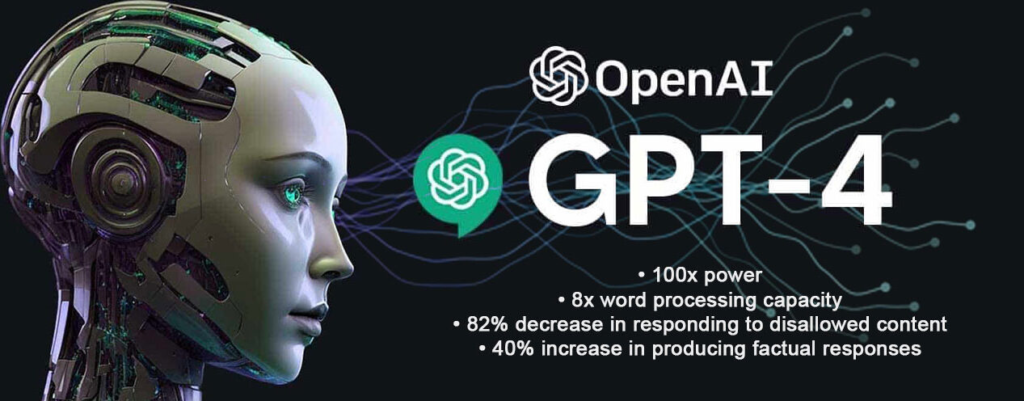
2020: GPT-3 demonstrates remarkable language ability. 2022: ChatGPT launches — fastest-growing app in history. 2023: GPT-4, Claude, and Gemini bring multimodal capabilities. 2024: Sora generates realistic video. 2025: GPT-5 and agentic AI systems. 2026: AI is embedded into everyday hardware — from phones to smart glasses. The pace of progress has accelerated from decades to months. AI models in 2026 surpass human performance on many benchmarks. The focus has shifted to responsible deployment, regulation, and bringing AI into the physical world through AI-powered wearable devices.
FAQ
Who invented artificial intelligence?
John McCarthy coined the term in 1956. Alan Turing laid the theoretical foundation in 1950. Many researchers contributed to AI’s development across decades.
What caused the AI winters?
Overpromising and underdelivering. Researchers made bold predictions that did not materialize, leading to funding cuts. Each winter lasted 5-10 years.
When did modern AI begin?
2012 (AlexNet winning ImageNet) is widely considered the beginning of the modern deep learning era. 2020 (GPT-3) began the generative AI era.
What is the most important AI milestone?
The Transformer paper (2017) is arguably the most important single paper, enabling GPT, Claude, Gemini, and essentially all modern AI systems.
Be Part of AI’s Next Chapter
The next chapter of AI history is being written in hardware. HuaHai Smart Glasses brings AI from the cloud to your everyday life. Explore our vision or partner with us to build the future of AI wearables.