
For years, smart glasses struggled to become mainstream. Most products felt more like “tech experiments” than real consumer products — bulky, expensive, and difficult to use naturally in daily life.
Ray-Ban Meta changed that.
It is one of the first AI glasses products that feels practical, wearable, and socially acceptable for everyday users. More importantly, its success is reshaping how the entire AI glasses industry thinks about the future.
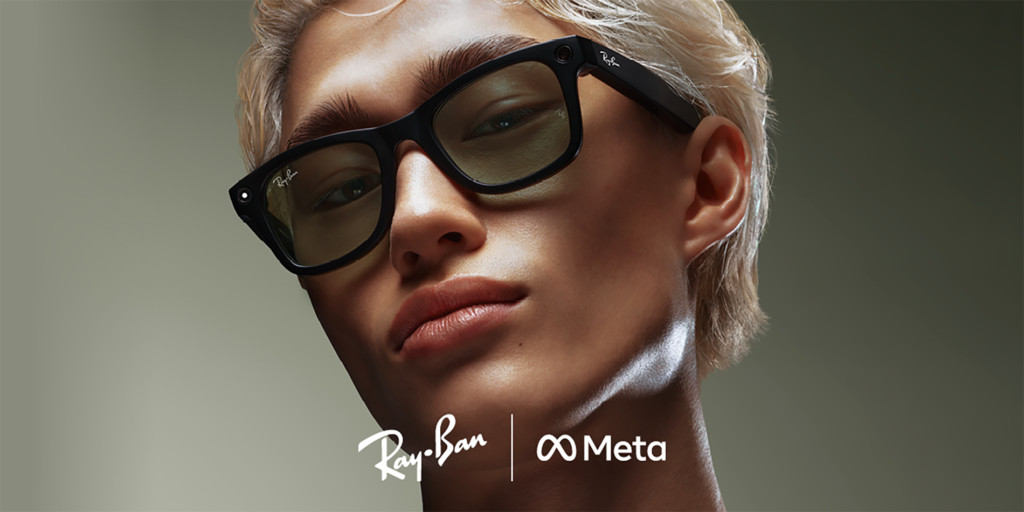
Ray-Ban Meta Solved the Most Important Problem: People Actually Want to Wear It
Many people think Ray-Ban Meta became popular because of AI.
In reality, its biggest advantage is much simpler: it first became a good pair of glasses.
Previous smart glasses often looked overly technical and awkward. Ray-Ban Meta kept the classic Ray-Ban design language, making the product feel more like fashionable eyewear than futuristic hardware.
For wearable devices, this matters a lot. If users are not comfortable wearing the product every day, even advanced AI features lose value.
It Focuses on Daily Use Instead of “Tech Demos”
Ray-Ban Meta succeeded because its functions are highly practical:
- Photos and video recording
- Music and calls
- Voice assistant
- Real-time translation
- Quick AI interaction
These are all high-frequency daily activities.
Instead of creating completely new behavior, the glasses improve things users already do. First-person recording, hands-free interaction, and instant AI access feel natural in scenarios like traveling, cycling, driving, or multitasking.
That is why many users continue using the product long after the initial curiosity disappears.

AI Finally Feels Useful
Ray-Ban Meta succeeded because its functions are highly practical:
- Photos and video recording
- Music and calls
- Voice assistant
- Real-time translation
- Quick AI interaction
These are all high-frequency daily activities.
Instead of creating completely new behavior, the glasses improve things users already do. First-person recording, hands-free interaction, and instant AI access feel natural in scenarios like traveling, cycling, driving, or multitasking.
That is why many users continue using the product long after the initial curiosity disappears.
What Does Ray-Ban Meta Teach the Industry?
For years, companies focused heavily on AR displays, processing power, and futuristic concepts.
But Ray-Ban Meta proved that consumers care more about:
- Comfort
- Lightweight design
- Natural interaction
- Daily usability
Instead of pushing heavy AR systems, Meta focused on making the product easy to wear and easy to use.

Lightweight AI Glasses May Become the Mainstream Direction
Current AR glasses still face major problems with weight, battery life, heat, and cost.
Ray-Ban Meta showed that lightweight AI glasses may have a much faster path to mass adoption because they fit naturally into everyday life.
The industry is now moving toward products that are:
- Smaller
- Lighter
- More comfortable
- Less intrusive
rather than purely focusing on complex AR experiences.
Fashion and Branding Are Becoming More Important
Meta brought the AI technology, but Ray-Ban helped make the product socially acceptable.
That partnership showed something important: AI glasses are not only tech products — they are also fashion products.
In the future, more collaborations between tech companies and eyewear or fashion brands are likely to appear.
Final Thoughts
Ray-Ban Meta did not win because it had the most advanced technology.
It won because it made AI glasses feel natural.
Its success shows that the future of AI glasses may not start with futuristic AR experiences, but with simple products people genuinely want to wear every day.