 跳至内容
跳至内容 

This isn’t a hypothetical “one day this could help” story. Blind and low-vision users are already using AI smart glasses to read menus, identify objects, and get around unfamiliar places, and the evidence for it is stronger than most “accessibility angle” content pieces have.
Quick Answer
Yes, with real limits. AI smart glasses can read text aloud, describe scenes, and answer questions about what’s in front of the wearer, which genuinely helps many low-vision and some blind users. They are not a replacement for a cane or guide dog, most models need a phone connection for full features, and insurance rarely covers them.
Key Takeaways
- Blind users are already adopting mainstream AI glasses, not just purpose-built devices, according to news coverage of real users (KTLA).
- A clinical trial is actively studying AI glasses for improving mobility in low-vision patients, not just marketing claims (ClinicalTrials.gov).
- Purpose-built assistive glasses (like Envision) now use advanced AI models to read documents aloud on request.
- These devices support independence; they don’t replace mobility aids like a cane or guide dog, and most aren’t covered by insurance yet.
What Can They Actually Help With?
The genuinely useful features for low-vision and some blind users come down to the camera plus AI doing the “looking” that the wearer can’t:
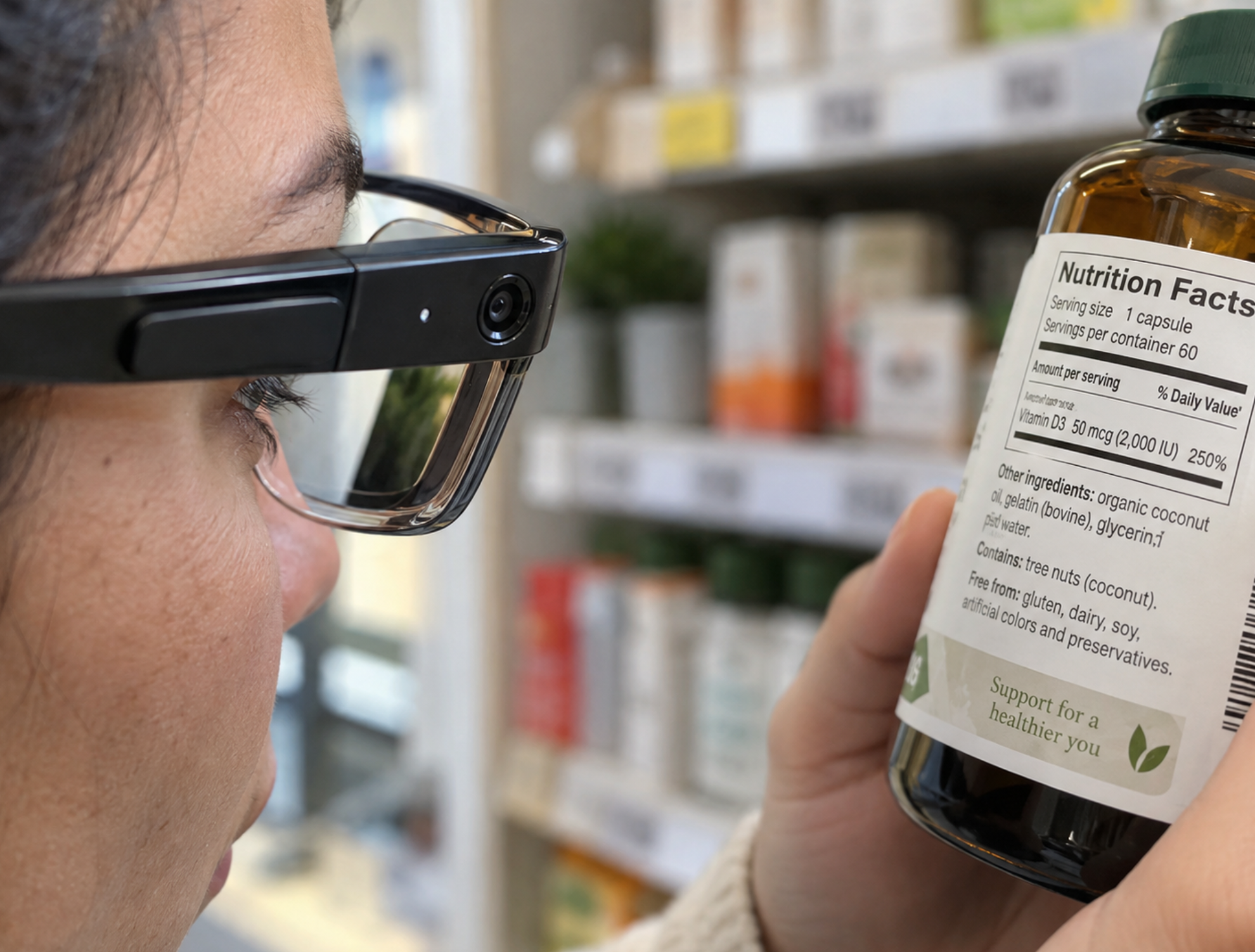
- Reading text aloud — menus, mail, medication labels, street signs.
- Describing scenes — what’s in a room, who’s nearby, general surroundings.
- Identifying objects — telling two similar products apart, checking an expiration date.
- Basic navigation cues — describing what’s ahead, not full turn-by-turn guidance for the blind.
Purpose-built options go further: Envision Glasses added an “Ask Envision” feature that lets users scan a document and ask specific questions about it using GPT-5 (Global Sources), which is a meaningfully more capable interaction than a general-purpose camera glasses assistant.
Is This Backed by Real Evidence, or Just a Nice Idea?
Real evidence, which is unusual for this kind of “could theoretically help” topic. A clinical trial specifically titled “Meta Glasses for Low Vision” is actively studying whether mainstream AI glasses improve mobility for people with low vision (ClinicalTrials.gov, NCT07317180). Separately, news coverage has documented blind users choosing to adopt Meta’s mainstream Ray-Ban AI glasses specifically for their AI features, not because they were designed as assistive devices first (KTLA).
What They Can’t Do (Be Honest About This)
This is where a lot of accessibility-angle content oversells. Being clear about the limits matters more than the pitch:
- Not a replacement for a cane or guide dog. These tools handle obstacle detection and physical navigation that AI glasses aren’t designed for.
- Most need a paired phone for full AI features, so a dead phone battery limits functionality.
- Insurance rarely covers them as an assistive device, unlike some purpose-built low-vision aids.
- Accuracy isn’t perfect, especially in poor lighting, fast motion, or cluttered scenes.
For seniors specifically, comfort and simplicity matter as much as features. If prescription lenses are a factor, see our guide on whether AI smart glasses support prescription lenses.
For seniors or low-vision users trying AI glasses for the first time, a simple camera-based model with clear voice feedback is a better starting point than a feature-heavy flagship.
Frequently Asked Questions
Can AI smart glasses replace a guide dog or cane?
No. They can describe surroundings and read text, but they aren’t designed or tested as a primary mobility or obstacle-detection tool the way a cane or guide dog is.
Do AI smart glasses work without a phone for low-vision use?
Basic functions may work standalone, but most advanced AI features (detailed descriptions, document reading) require a paired phone with an internet connection.
Are AI smart glasses covered by insurance as an assistive device?
Generally no, as of 2026 most mainstream AI glasses are not classified or covered as assistive medical devices, unlike some purpose-built low-vision aids.
Curious what else AI smart glasses are actually used for day to day?