





Short answer
Most smart glasses are water-resistant, not waterproof. A water-resistant pair can handle sweat, light rain and splashes if it has a stated IP rating, but it is not made for showering, swimming or soaking. The IP rating on the spec sheet and the warranty terms tell you more than the word “waterproof” on a box.
Key Takeaways
- “Waterproof” and “water-resistant” are not the same, and most smart glasses are only the second.
- Read the IP code: the first digit is dust protection, the second is water protection, and X means not tested.
- Lab tests use clean water, so sweat, salt, soap and chlorine are harder on glasses than the rating suggests.
- Brands and distributors should ask for the test report and check whether the warranty excludes liquid damage.
What is the difference between waterproof and water-resistant?
Waterproof implies safe submersion, while water-resistant means the product handles limited exposure such as splashes or light rain. Smart glasses have microphones, speakers, buttons, hinges and charging contacts, so each opening is a place water can enter.
For that reason most brands describe their glasses as water-resistant and give an IP rating. Treat any product that says “waterproof” without a rating as unverified until you see the test details.
How do you read an IP rating on smart glasses?
An IP code has two digits: the first covers dust and solid particles, the second covers water. A digit replaced by X means the product was not tested for that category. The codes follow the IEC 60529 standard.
| Rating | What it generally means | Fits |
|---|---|---|
| IPX4 | Tested against water splashing from any direction; no dust rating | Sweat, light rain, washing hands nearby |
| IP54 | Limited dust protection plus splash resistance | Commuting, outdoor walks |
| IP65 | Dust-tight and tested against water jets | Heavier rain, sweaty workouts |
| No rating | No tested protection | Keep dry |
Immersion ratings are a separate category, and smart glasses rarely carry them. Always check the exact code and what test conditions the brand used.
Can you wear smart glasses in the rain, at the gym or in the shower?
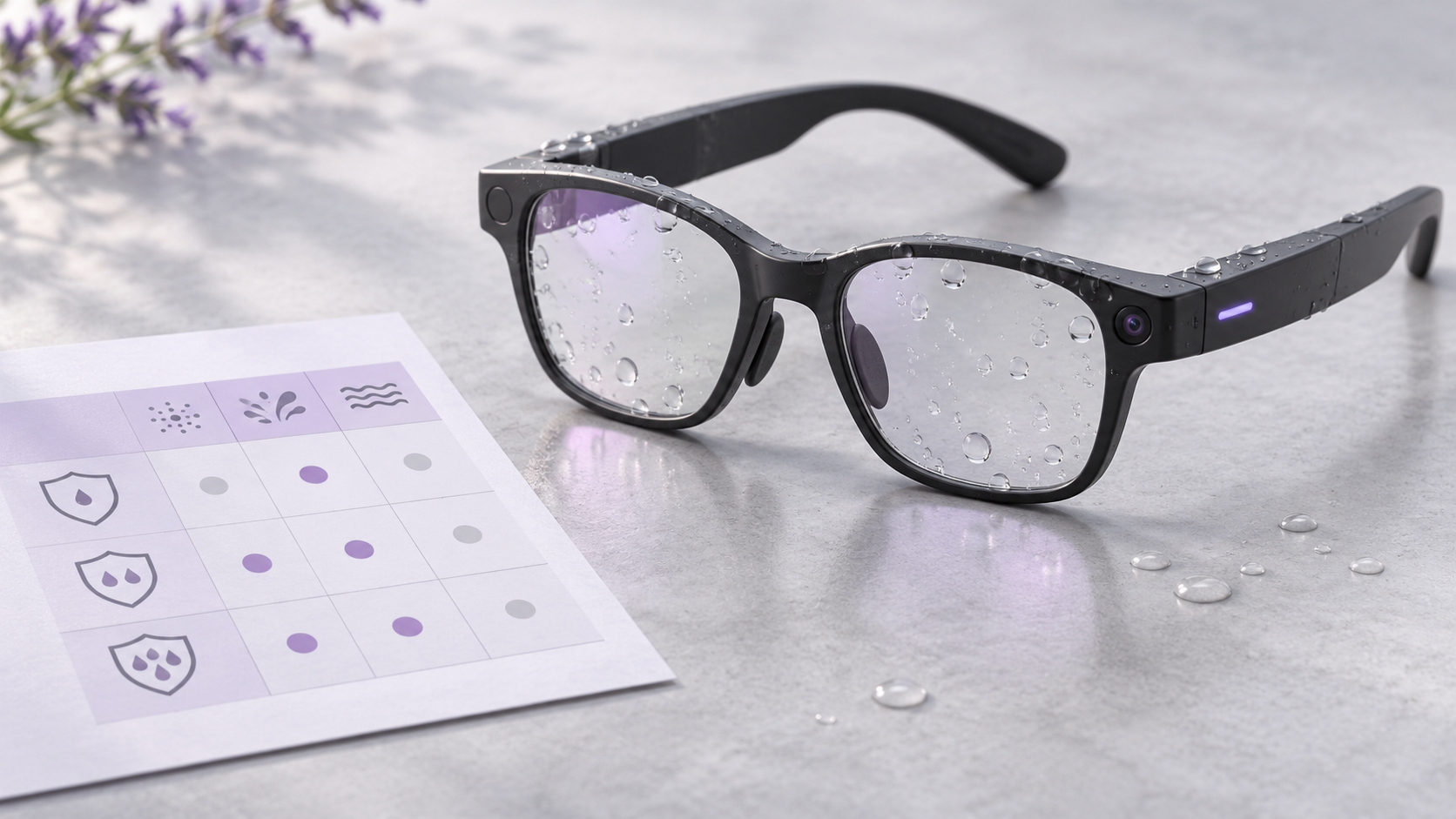
Rain and sweat are usually fine for a rated pair, while showers and swimming are not. The difference is the type of exposure.
- Light rain and splashes: generally fine if the glasses have a splash rating such as IPX4.
- Sweat: usually fine, but salt residue can build up around seams and contacts, so wipe the glasses after use.
- Showering: avoid it. Heat, steam, soap and pressure are harder than a lab splash test.
- Swimming and the sea: avoid it. Chlorine and salt water are harsher than the fresh water used in testing.
- Charging while wet: never. Dry the charging contacts first.
Where does water get into smart glasses?
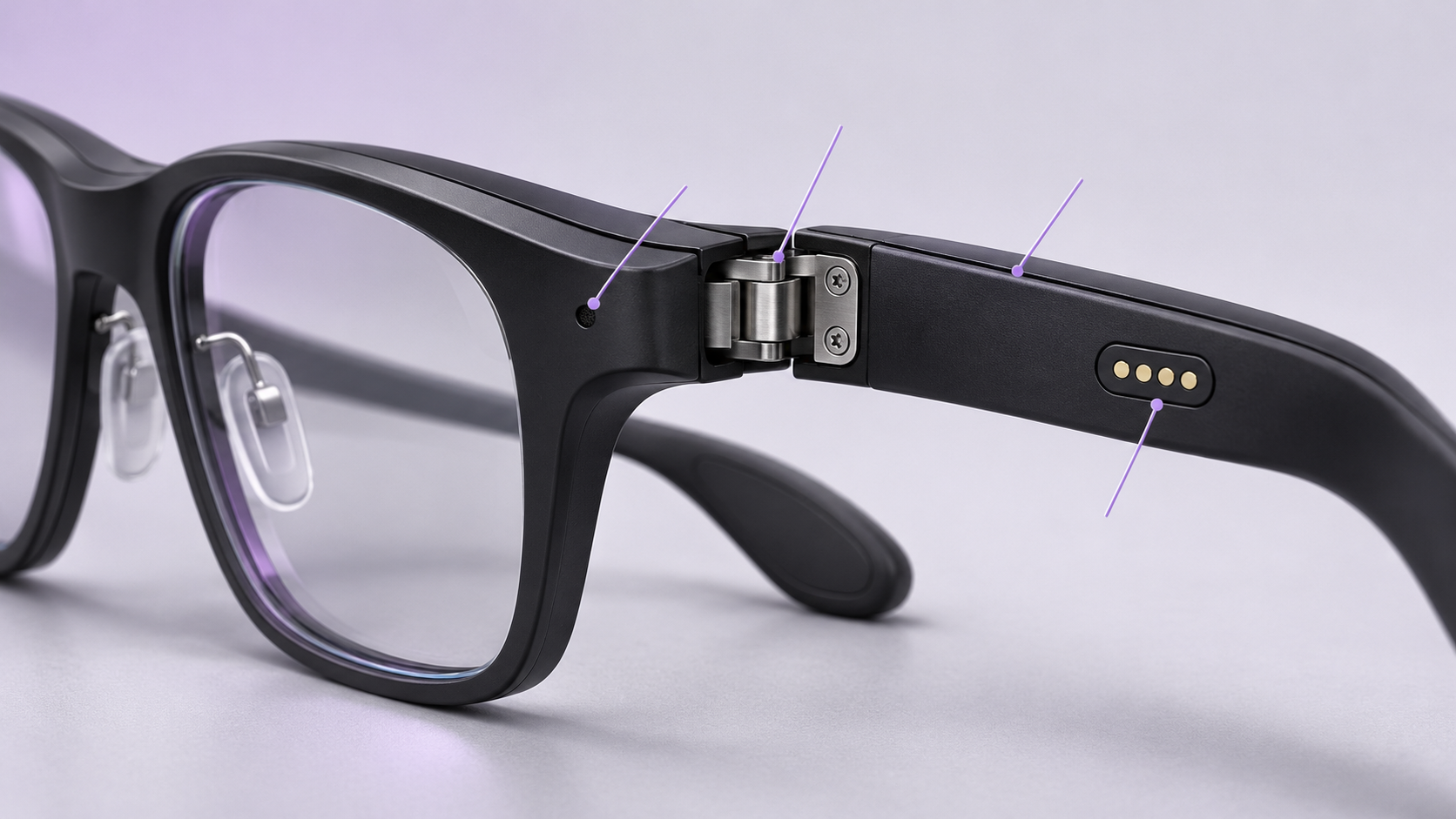
Water usually enters through microphone openings, buttons and touch areas, hinges and seams, and charging contacts. These are the parts to inspect on a sample.
- Microphone and speaker openings: they need an acoustic path, which makes full sealing harder.
- Buttons and touch surfaces: gaps around moving parts can let moisture in.
- Hinges and seams: repeated opening, drops and twisting can loosen seals over time.
- Charging contacts: moisture here can cause corrosion or a short.
Why is sweat harder on smart glasses than a lab test suggests?
Sweat is harder than lab water because it carries salt and keeps the frame damp for hours. Lab ratings are usually done with clean water, so they do not cover soap, chlorine, salt or steam.
- Salt residue: it builds up at seams, buttons and charging contacts and can cause corrosion over time.
- Humidity: hot, damp storage, such as a gym bag, keeps moisture near the electronics.
- Wear and aging: drops, twisting and aging seals can reduce water resistance after purchase.
| Daily situation | Rating worth looking for | Habit that helps |
|---|---|---|
| Office and commute | Any splash rating | Keep them out of bags with open drinks |
| Gym and running | IPX4 or higher | Wipe after use and air-dry before storage |
| Cycling and outdoor travel | IP54 to IP65 | Dry before charging; avoid pressure washing |
What should you do if smart glasses get wet?
Remove them, blot them dry and let them air-dry before use. Do not charge them until they are fully dry.
- Power off: turn the glasses off and take them off.
- Blot dry: use a soft cloth and keep the charging contacts facing down.
- Air-dry: leave them in a ventilated place, away from heat sources.
- Charge later: wait until contacts and openings are fully dry.
When cleaning afterward, use a dry microfiber cloth first, and avoid running water, high-pressure spray and solvents. Charging details are in the battery life and charging guide.
What should brands and distributors check?
Ask for the IP test report for the exact model and check what the warranty says about liquid damage. A rating on a listing means little without the report.
- Test report: which standard, which lab, which date, and which exact model.
- Test scope: does the rating apply to the glasses only, or to the glasses plus the charging case?
- Warranty: many warranties exclude liquid damage even when a rating exists.
- Return risk: water damage claims are a common return reason, so state the real rating on the product page.
- Marketing wording: use “water-resistant” with the code, not “waterproof.”
For a wider supplier review, see the 12-point supplier checklist.
How does HuaHai approach water resistance?
HuaHai lists water resistance only where its product pages state it. The V06 AI sports smart glasses page lists an IPX4 splash rating, which matches the sports-use positioning of its wraparound frame. HuaHai’s pages for the V03 and HY16 do not state an IP rating in the specifications used for this article, so treat those models as having no listed rating.
- V06: IPX4 splash rating listed on the product page.
- Other models: ask for the rating and test report for the exact model before you promote water resistance.
- Documents: HuaHai’s site lists CE, FCC, RoHS, UN38.3 and MSDS for selected models; none of these are water-resistance tests.
See the V06 AI sports smart glasses and the cycling smart glasses range.
Sourcing smart glasses for your brand?
Frequently Asked Questions
Are smart glasses waterproof?
Smart glasses are usually water-resistant, not waterproof. Check the IP rating on the spec sheet, because the word “waterproof” alone does not tell you what was tested.
Can I wear smart glasses in the rain?
You can wear smart glasses in light rain if they have a splash rating such as IPX4. Dry them afterward and avoid charging until the contacts are dry.
Can smart glasses go in the shower or pool?
Smart glasses should not go in the shower or pool, even with a splash rating. Heat, soap, chlorine and pressure are harsher than the clean-water lab tests behind the rating.
What does IPX4 mean on smart glasses?
IPX4 on smart glasses means they were tested against water splashing from any direction, and the X means no dust rating was given. Ask for the test report to confirm the conditions.
Does a warranty cover water damage on smart glasses?
A warranty may not cover water damage on smart glasses, because many exclude liquid damage even when a rating exists. Read the warranty terms before you rely on the rating.
Bottom line
Smart glasses are water-resistant at best, so choose by the stated IP code and the warranty, not by the word “waterproof.” Distributors should ask for the test report and describe the rating honestly to avoid returns.