





Short answer
Smart glasses cost from under $50 for basic audio frames to over $1,000 for developer and enterprise models. Most camera glasses sit in the middle of that range, and models with a built-in display cost more. The price follows three things: whether the frame has a camera, whether it has a display, and how much AI work happens in the glasses versus the phone app.
Key Takeaways
- Price tiers follow hardware: audio only, camera and AI, display, then developer or enterprise.
- The camera, the display and its optics, the battery and the brand are the biggest cost drivers.
- The sticker price is not the full cost: prescription lenses, warranty terms and subscriptions change it.
- For distributors, the useful number is the ex-works unit price at your volume, not the retail price.
How much do smart glasses cost at each price tier?
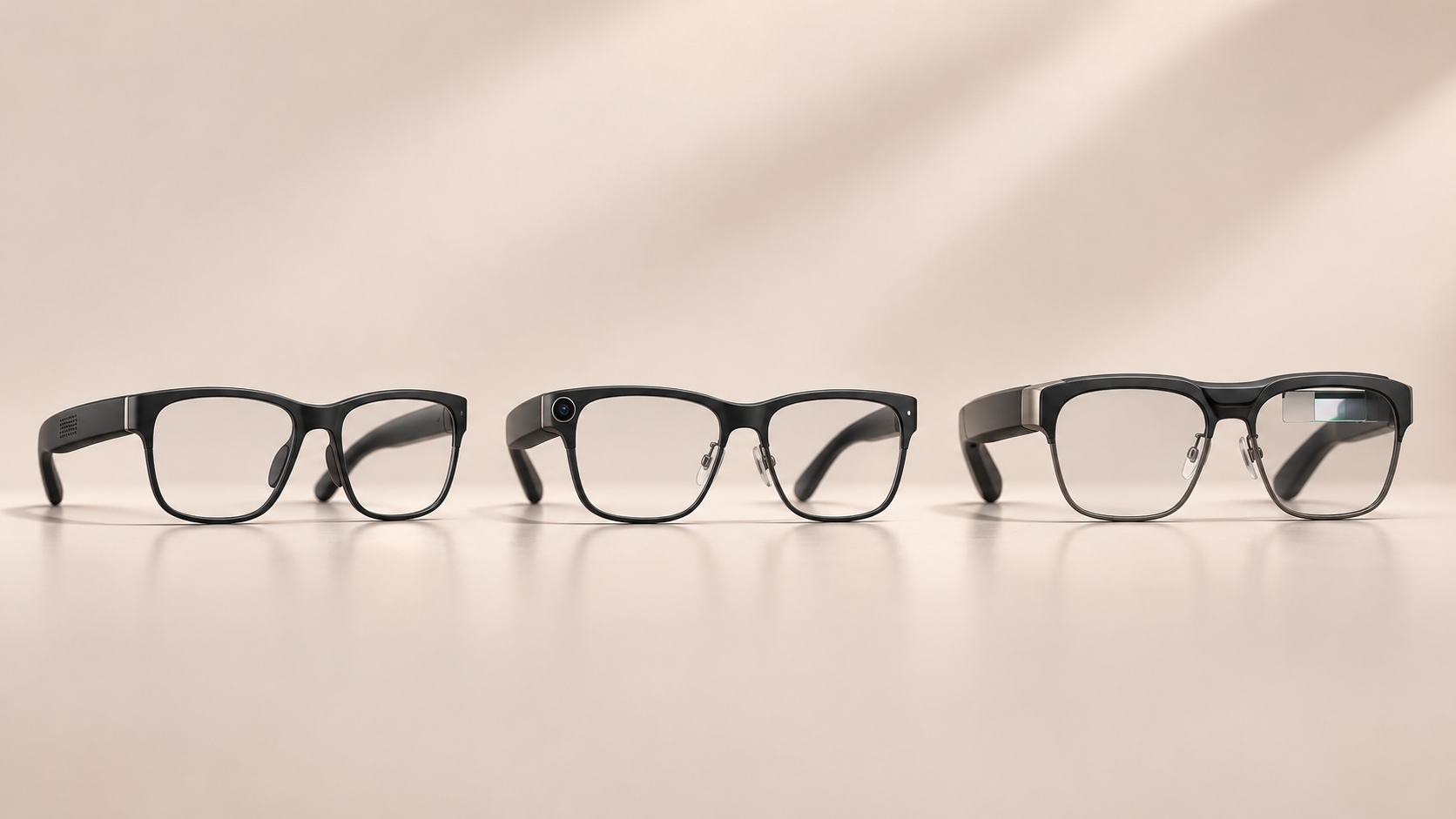
Retail prices fall into four rough tiers, and each tier adds one major hardware feature. One buyer’s guide from a premium smart glasses brand puts the tiers at about $50–$200 for basic audio glasses, $200–$450 for camera or tighter AI integration, $500 and up for display models, and $1,000 and up for developer and industrial models (see Even Realities’ AI glasses pricing guide, last updated November 2025). That is a brand’s own view, so treat the ranges as a rough map, not a market survey.
| Tier | Typical hardware | What the buyer gets |
|---|---|---|
| Audio | Speakers, microphones, Bluetooth | Music, calls, phone voice assistant |
| Camera and AI | Camera, storage, Wi-Fi, microphones, companion app | Photos and video, voice assistant, translation through the app |
| Display | Micro display and optics, larger battery | Visual prompts, captions, navigation-style overlays |
| Developer and enterprise | Open platforms, sensors, SDK | Custom software and industrial use |
What makes smart glasses cost more?
The display, the camera, the battery and the AI service are the four biggest cost drivers. Each one adds parts, engineering and testing.
- Display and optics: a micro display and its lens path cost far more than a speaker and a microphone.
- Camera and storage: sensor quality, stabilization and on-board memory all raise the bill of materials.
- Battery and charging: a bigger battery adds weight, so brands trade run time against comfort. See smart glasses battery life by feature.
- AI and software: a polished app and AI service cost money to build and run, and some brands pass that on as a subscription. See whether AI glasses have a monthly fee.
- Frame and brand: materials such as titanium and a famous eyewear brand push the price up without adding electronics.
What costs extra beyond the sticker price?
The sticker price leaves out lenses, warranty terms, accessories and service fees. Check these four before you compare two models on price alone.
- Prescription lenses: corrective lenses are usually an extra cost, and the process differs by brand. See how smart glasses support prescription lenses.
- Warranty: length and what it excludes, including liquid damage, vary.
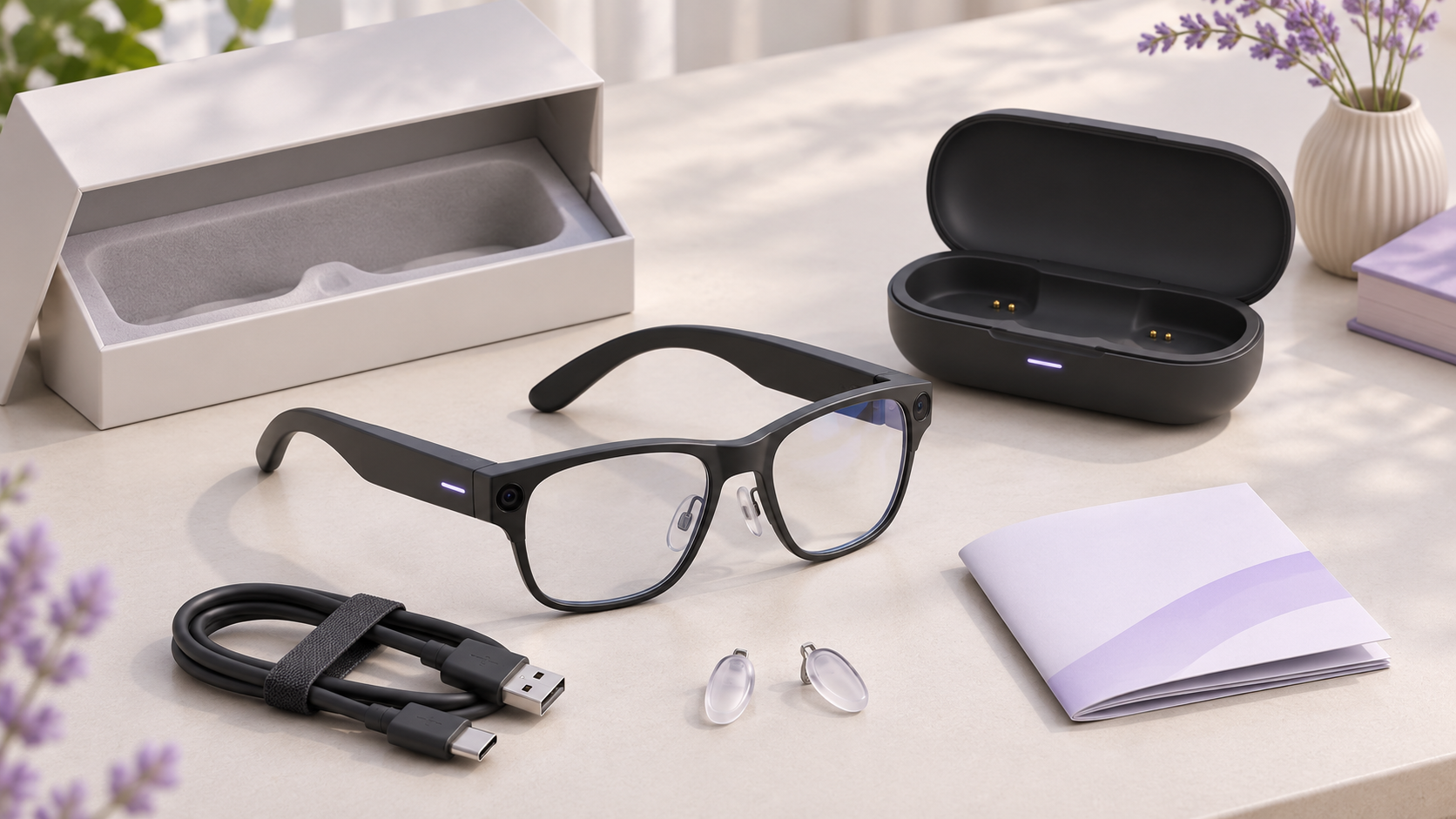
- In the box: a charging case, cable and spare nose pads may or may not be included.
- Subscriptions: confirm that core features such as translation or AI answers are not locked behind a plan.
Which price tier fits which use?
Pick the tier by the job the glasses must do, not by the highest feature list. Paying for a display that the wearer never uses is the most common waste.
| Use case | Tier that usually fits | Why |
|---|---|---|
| Music, calls and a voice assistant on the go | Audio | No camera or display to pay for; light frame |
| Hands-free photos and video, travel and creators | Camera and AI | Camera, storage and app are the main value |
| Live captions, prompts or navigation in view | Display | Needs a micro display and optics |
| Custom software, research or industrial use | Developer and enterprise | Needs an open platform or SDK |
- Weight matters: every added part adds grams, and comfort drives long-term use.
- Battery matters: a camera or display shortens run time, so check listed hours by feature.
- Privacy matters: models without a camera avoid recording concerns in some venues. See where recording eyewear is restricted.
How can buyers get a better price?
Buyers lower the cost per pair by choosing the right tier, ordering at a price break and buying direct from the maker. Retail buyers can also use payment plans, and some regions allow prescription eyewear to be paid from health spending accounts, so check local rules.
- Skip unused features: a model without a display costs less than one with it.
- Order at a break: the unit price drops at higher quantities, as the table below shows for HuaHai.
- Buy direct: fewer middlemen means fewer margins stacked on the unit price.
- Compare totals: add lenses, shipping and warranty before you decide.
What should brands and distributors check about price?
Distributors should compare the ex-works unit price at their own order size, plus the cost of customization, certificates and shipping. A cheap retail price tells you little about your margin.
- Price breaks: ask for the unit price at several quantities, not one.
- What is included: packaging, export carton, charging case and accessories can change the unit price.
- Customization: logo, color, box and app changes each have their own minimum and cost. See what sets the smart glasses MOQ.
- Landed cost: shipping, duty and certification costs sit on top. Use the landed cost and profit calculator.
- Returns and support: warranty terms affect your real cost more than a small price gap.
How does HuaHai approach pricing?
HuaHai lists ex-works prices with price breaks on its product pages, and these are business prices, not retail prices. The figures below come from the July 2026 price list on the V03, V06 and HY16 product pages, in US dollars per pair, EXW, including packaging labor and an export carton.
| Model | Sample | 100 pcs | 500 pcs | 1,000 pcs |
|---|---|---|---|---|
| V03 AI smart glasses | $39 | $38 | $37 | $35 |
| V06 AI sports smart glasses | $41 | $40 | $39.90 | $38 |
| HY16 AI camera smart glasses | $58 | $56 | $55 | $53 |
- Standard models: the three product pages list no MOQ, with one pair as the minimum.
- Samples: sample cost is deducted from the bulk order, per the product pages.
- Customization: laser logo from 100 pieces and silk screen from 500, with higher tiers for packaging and software.
- Not included: freight, duty and taxes. Prices can change, so ask for a current quote.
See all models in the camera smart glasses range.
Sourcing smart glasses for your brand?
Frequently Asked Questions
How much do smart glasses cost on average?
Smart glasses cost from under $50 to over $1,000, and most camera models sit in the middle of that range. One brand’s guide puts the mid-tier at about $200–$450, so use it as a rough guide, not a fixed figure.
Why do some smart glasses cost so much more than others?
Some smart glasses cost more because they add a display, a better camera, a bigger battery or a premium frame. Brand and software service costs also raise the price.
Do smart glasses cost extra for prescription lenses?
Smart glasses usually cost extra for prescription lenses, and the process differs by brand. Ask whether lenses are made to order or fitted by a local optician.
How much do smart glasses cost wholesale?
Wholesale smart glasses prices depend on model and quantity. HuaHai lists ex-works sample prices from $39 to $58 per pair on its V03, V06 and HY16 pages, with lower prices at 100, 500 and 1,000 pieces.
Is the ex-works price the final cost of smart glasses?
The ex-works price is not the final cost of smart glasses, because freight, duty, taxes and certificates are added on top. Calculate landed cost before you set a retail price.
Bottom line
Smart glasses prices follow hardware, so decide on camera, display and AI features first and then compare prices within that tier. For resale, work from the ex-works price at your volume and add customization, freight and duty.